
Pricing vs Purpose: The Lesson I Learned the Hard Way
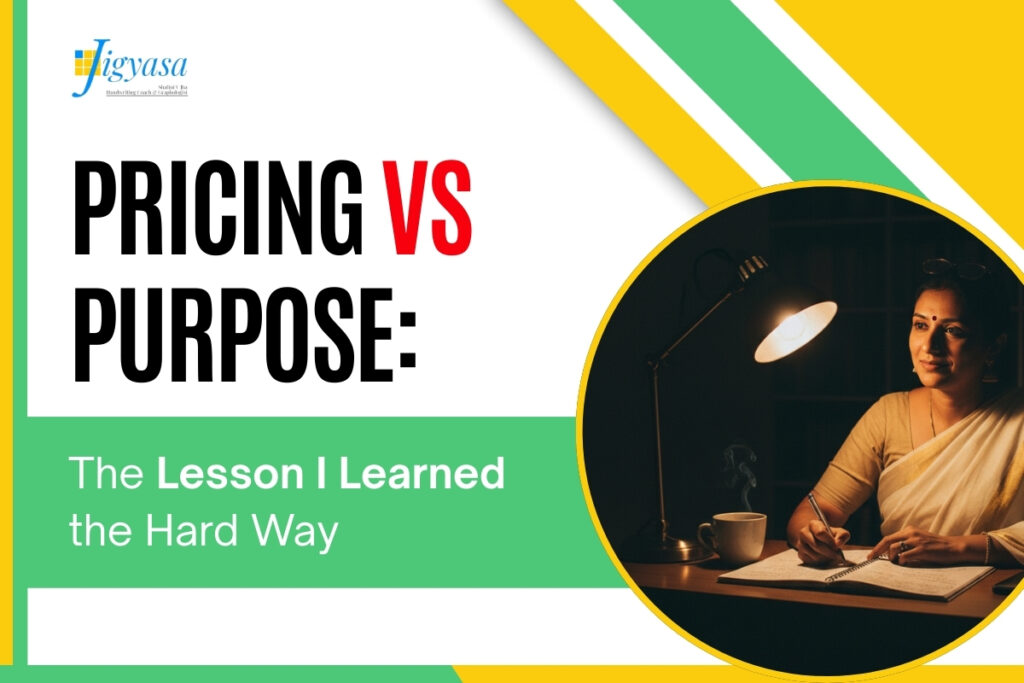
The Night I Almost Quit My Work And the lesson that taught me the difference between pricing and purpose. When I first started offering graphology consultations, I charged ₹500. Not because that’s what the work was worth, but because that’s all people were willing to pay. It seemed fair at the time. I was new, passionate, and eager to help. But deep down, I knew what I was offering went far beyond a “quick handwriting analysis.” I would spend hours studying each person’s handwriting, understanding their emotions, and designing personalized graphotherapy steps. I helped people reduce anxiety, rebuild confidence, and reconnect with parts of themselves they had long forgotten. And yet, business was slow. Some weeks, I’d have just two or three calls. The enthusiasm that once fuelled me began to fade, replaced by a quiet fear that maybe I had chosen the wrong path. One night, overwhelmed by doubt, I whispered to myself, “Maybe it’s time to stop. Maybe this isn’t working.” The next morning, my phone rang. It was a mother I had worked with a few weeks earlier. Her son had been anxious and withdrawn when we first began his sessions. Through tears, she told me, “Thank you. He’s smiling again. He eats with us. He talks.” That call changed everything. It was the answer I couldn’t find the night before. It reminded me why I had started in the first place, not for the price tag, but for the purpose. That moment taught me one of the most profound lessons of my career: even if the world doesn’t see the value of your work, you must. It’s easy to measure worth through money, visibility, or validation. But the purpose isn’t about external recognition. The purpose is quiet. It’s what keeps you going when logic tells you to quit. It’s what whispers, “You’re making a difference,” even when no one else does. Looking back, I realize that night wasn’t a sign to stop, it was a test of belief. A reminder that while pricing defines what people pay you, purpose defines what keeps you alive in your work. If you’re someone who’s building something from the ground up, whether it’s a business, a dream, or a calling, remember this: you may not be paid what you’re worth right now. You may not be seen, appreciated, or understood. But if your work brings light to someone’s life, you’re already doing something extraordinary. Don’t stop showing up.Every single day.
Why We Need to Rethink What a ‘Red Flag’ Really Means
“I Thought You Were Out of My League” Is Not Always a Red Flag Why we need to stop letting social media define our relationships. If a man says, “I thought you were out of my league,”it’s not necessarily romantic,but it’s not always a red flag either. Just like you, I’ve come across countless Instagram reels, YouTube shorts, and even catchy blog posts that toss this line around with absolute confidence. But here’s a question worth pausing on What exactly is a red flag? Social Media Has Oversimplified Relationships In my experience of working with couples and individuals navigating relationship challenges over the past three years, I’ve realized something important: We’ve become too quick to label things as red flags. And that tendency — while well-intentioned — is one of the biggest reasons people today are too quick to dismiss relationships that might have had real potential. What a Red Flag Is Not A red flag is not your partner struggling to express emotions. It’s not about a clumsy compliment or a nervous confession. We’re human.We fumble with words.We say things awkwardly.We learn how to love while still figuring ourselves out. And sometimes, “You’re out of my league” simply means, “I admire you, and I’m still learning to feel worthy of you.” That’s not manipulation, that’s vulnerability. What a Real Red Flag Looks Like A true red flag is something far more serious: ⚠️ When your partner is manipulative⚠️ When they are consistently dishonest⚠️ When they show repeated disrespect⚠️ When they are emotionally, mentally, or physically abusive That’s when you need to notice, step back, and protect yourself. Because those patterns aren’t slips of the tongue, they’re signs of harm. Let’s Not Blur the Line Real relationships are far more complex than what we see on reels, shorts, or viral posts. Social media loves to make things black and white. But relationships live in the grey, the space where understanding, communication, and compassion exist. So let’s not let social media define what we stand for and what we don’t. Let’s bring empathy back into the conversation.
The Real Weight You’re Carrying Isn’t on the Scale
Weight Loss Offers Are Modern-Day Frauds Because what most people need isn’t a diet plan — it’s healing. “Lose 5 kgs in 9 days – Navratri Offer.” We’ve all seen it.We’ve all paused. And let’s be honest, some of us have even believed it. Those words promise transformation.They sound tempting, hopeful, even urgent. But here’s the truth, quick fixes are the oldest trick in the book. What If the Real Weight Isn’t on the Scale? Let’s ask some uncomfortable questions. What if instead of losing 5 kgs in 9 days, you gave yourself just one day in therapy? What if the real weight you’re carrying isn’t on your body, but in your mind? What if the issue isn’t your shape — but what your body is silently going through? Because when we chase surface-level solutions,we forget that our bodies don’t work in isolation. They speak the language of emotion, stress, and unprocessed pain. Quick Fixes Promise Hope, But Steal Healing Weight loss offers sell urgency. They sell hope wrapped in impossible promises. But real healing doesn’t happen in 9 days. It happens when you go to the root. When you stop punishing your bodyand start understanding it. When you stop treating food as the enemy and start listening to what your emotions are saying through your appetite, your energy, your fatigue. Because Healing Is Holistic Your gut and your mind are deeply connected.Your emotions shape your health.Your worth is never defined by a number on a scale. Yet people will happily pay for 9 days of suffering…but hesitate to invest in 1 day of therapy. Strange, isn’t it? Maybe it’s time we stop chasing temporary change and start working toward permanent peace.
CEOs, Your Signature Is Telling a Story — Is It the Right One?
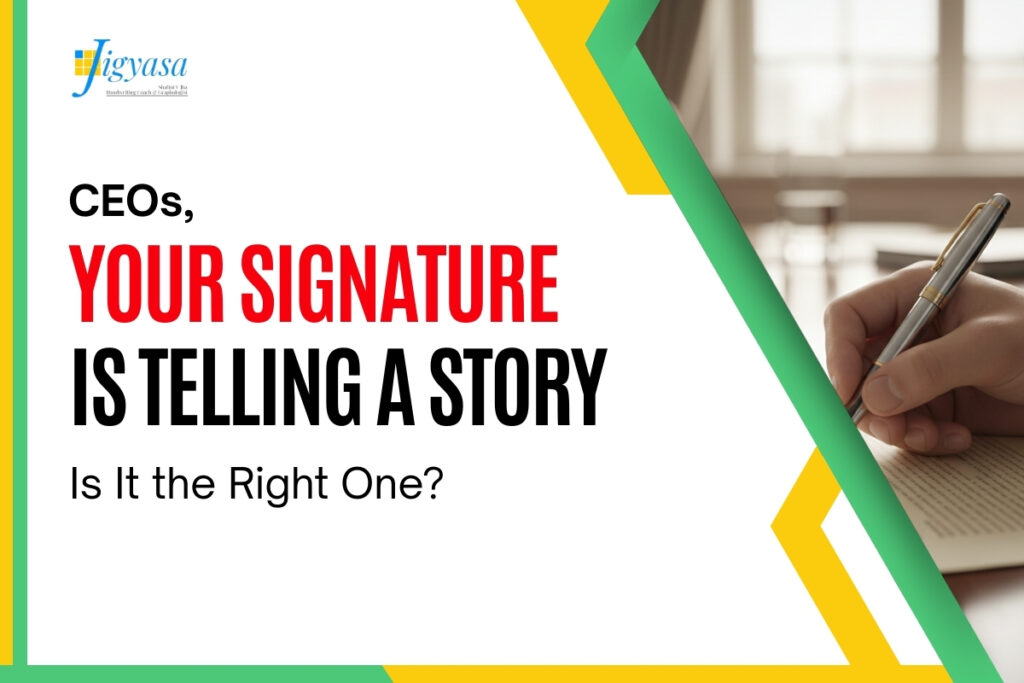
Your Signature Is Your Brand What your signature reveals about your leadership, confidence, and legacy. When a CEO signs a deal, they rarely pause to think about what that signature really means. That mark on paper isn’t just ink…it’s an imprint of identity. It reflects authority, vision, confidence…or sometimes, hesitation. The Psychology Behind a Signature Over the years, I’ve analyzed signatures of top leaders across industries. And every time, patterns emerged. A signature captures so much more than your name.It captures your energy.Your sense of self.Your comfort with power. Your First Brand Mark Your brand isn’t just your logo or tagline.It isn’t your website, your design palette, or your pitch deck. Your brand is you. And your signature is often the very first visual expression of that brand.It’s the mark that authenticates your vision. The symbol that carries your leadership onto every document, every agreement, every deal. When you refine your signature,you’re not just improving your handwriting…you’re refining how the world perceives your confidence, clarity, and command. A Question for Every Leader So here’s something to reflect on: CEOs, when was the last time you looked at your own signature, not as a formality, but as your brand? Because in a world where every detail tells a story,even your signature speaks.
Slowed My Business Growth for 6 Years, Don’t Make the Same Mistake
For six years, I unknowingly held my own business back. Why?Because I stayed away from social media. I thought it was shallow.A distraction.A place for selfies, vacation posts, and endless scrolling. I told myself, “Real work happens in real life.”And I truly believed it. But here’s the truth…that mindset cost me years of growth. I missed opportunities.I missed visibility.I missed clients I could have genuinely helped… simply because they didn’t know I existed. The Shift That Changed Everything Today, social media is one of the biggest reasons I work with clients across the world. It’s how people find me.Connect with me. Trust my work, even before we’ve had a conversation. And I’m not here for vanity metrics.I’m not chasing likes or followers. But I’ve learned something powerful: If your work changes lives, it deserves to be seen. If I had started earlier, who knows how much further I’d be? But there are no regrets, only lessons. Your Work Deserves an Audience So if you’re waiting for the “right time,” stop. Start now.Post that story.Share your work.Let people in. You don’t need to be perfect.You just need to be present. Because visibility isn’t vanity…it’s service.
When Betrayal Breaks the Truth: Can Love Ever Hold It Again?
Cheating Has No Parameters Only one question matters: Can the relationship hold the truth again? Yesterday, a client asked me a question that lingered long after our conversation ended. “What should be the parameter of cheating in a marriage?At what point can a person be forgiven?” It struck me. And when I thought about it deeply, my answer was simple, ask yourself:Can the relationship hold the truth again?Can you forget it completely? Because the truth is, no parameter can define cheating.There’s no universal rulebook, no set of conditions that decide what counts and what doesn’t. Sometimes, some questions are entirely personal.No psychologist can answer them for you.No doctor can.No relationship guru can. Cheating isn’t just about what the guilty has done…it’s also about what the other person has to live with. The one who betrayed carries guilt.But the one who’s been betrayed… they carry the weight of every memory,every shared moment that now feels questioned. Before they can decide anything,they have to relive many chapters of their life…and then arrive at a single, painful crossroad: To forgive, or not.To stay, or not. And that decision — no matter what anyone says… is one only you can make.